
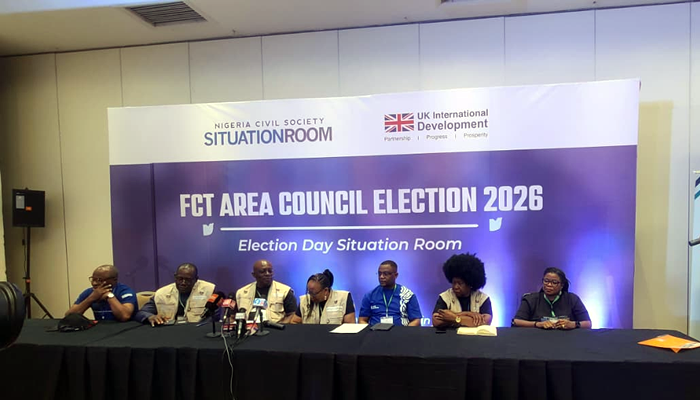
CLEEN Foundation’s Mid-Day Assessment of the 2026 FCT Area Council Elections: Delays, Apathy, and Limited Malpractice Recorded.
Introduction
CLEEN Foundation is observing the 2026 Federal Capital Territory (FCT) Area Council Elections and presents preliminary findings from reports received from its observers deployed across selected polling units in the FCT. This report captures observations, submitted between 7:15 a.m. and noon. which focuses on the opening of polls, deployment and conduct of security personnel, voter turnout, and general adherence to electoral procedures.
Methodology
CLEEN Foundation deployed experienced, non-partisan observers across selected polling units in the Federal Capital Territory to observe the 2026 FCT Area Council Elections, with focus on the conduct of security and law enforcement personnel deployed to secure the elections. Observations were conducted during the early voting period (7:15 a.m. – 11:00 a.m.) using standardised reporting tools. This is complemented by a robust data collection and analysis mechanism that enabled reports to be transmitted in real time to CLEEN Foundation’s Election Security Support Centre (ESSC), where they were verified and analysed. The findings presented are preliminary, based on observations from selected locations, and do not represent a final assessment of the overall conduct of the elections.
Preliminary Findings
Security Deployment and Conduct
Early Arrival of Security/Law Enforcement Personnel
Observers reported that law enforcement personnel were generally deployed early to most of the monitored polling units across the six Area Councils of the Federal Capital Territory. In several locations, security operatives were present before the official commencement of polls. For example, at Quarters Ward, Polling Unit 001, Gado Nasko Primary School in Gwagwalada Area Council, two police officers were on ground as early as 7:45 a.m., ahead of the arrival of election officials. Similar patterns were observed in parts of AMAC and Bwari, where security personnel positioned themselves strategically around polling units to ensure orderliness.
This early deployment contributed positively to crowd control, reduced tension during the accreditation process, and helped deter potential disputes and unlawful conduct in the early hours of voting. However, a few polling units recorded delayed or absent security presence at the time of observation. For instance, as of 7:53 a.m. at Polling Unit 010, Kuje Central Ward in Kuje Area Council, INEC officials were present, but no security personnel had arrived. While such instances were limited, they highlight the need for improved coordination to ensure uniform and timely security coverage across all polling units.
Identification of Security/Law Enforcement Personnel
Security and law enforcement personnel deployed for the elections were largely identifiable by name tags and official uniforms at several observed polling units. In Abuja Municipal Area Council (AMAC), for instance, observers at Wuse Ward Polling Unit 011 (GSS Tudun Wada) and Polling Unit 073 (Benghazi Street) confirmed that security operatives displayed clear identification, enhancing transparency in their engagement with voters and electoral officials. Observers also reported the presence of personnel from the Nigeria Police Force and other security agencies across most polling units, including those in rural communities. The visibility of properly identified officers contributed to voter confidence and strengthened perceptions of professionalism and accountability in the overall security arrangement.
However, in isolated instances, observers noted insufficient visible identification, particularly in polling units where security personnel were stationed at a distance from the voting area. While this did not result in reported disruptions, clearer identification in all deployment contexts would further reinforce public trust and oversight.
Conduct of Security/ Law Enforcement Personnel
The conduct of security and law enforcement personnel were generally professional, restrained, and non-partisan. Most of them at the polling units were unarmed. Observers reported that security personnel maintained a visible presence, complied with electoral guidelines on the use of arms, and refrained from interfering in the voting process. In situations of tension or disagreement, security personnel acted to de-escalate conflicts and restore calm without the use of force as observed in Kuje Area Council at Junior Secondary School Kayarda polling unit and Abaji East Primary School 003, ward Nuku/Sabon in Abaji Area Council where party agents alleged that INEC Officials went somewhere different before arriving at the polling unit location. However, the security operatives were observed to settle the issue professionally. There were no widespread incidents of intimidation, harassment of voters, or undue interference by security personnel observed during the reporting period.
Welfare of Security & Law Enforcement Personnel
Reports received by the CLEEN Foundation Election Security Support Centre (ESSC) indicate that some security and law enforcement personnel deployed for election duty are yet to receive their operational allowances at the time of observation. This situation places affected personnel in a vulnerable position and may undermine morale during a critical national assignment. The timely payment of allowances and provision of welfare support for security operatives should remain a top priority for the relevant authorities. Ensuring their welfare not only safeguards their professionalism and neutrality but also reduces the risk of undue influence or exploitation by political actors and their agents.
Presence of Non-State Security Operatives:
CLEEN Foundation observers noted that, aside from the presence of State security operatives, there was a visible presence of non-state security officials, as observed in Polling Unit 067, Dawaki, where operatives of the Vigilante Group of Nigeria (VGN) and the Hunters Group were seen.
Delayed Commencement and INEC Deployment
CLEEN Foundation notes that several polling units across the Abuja Municipal Area Council (AMAC), Bwari, Gwagwalada, Abaji, Kuje, and Kwali Area Councils experienced the late arrival or absence of officials of the Independent National Electoral Commission (INEC) beyond the official start time. In some polling units, INEC officials arrived as late as 10:30 am, for instance at PU 073 Benghazi Street Wuse Zone 4, under Wuse ward, were yet to start accreditation and voting. In some locations, INEC officials arrived between 7:46 a.m. and 8:10 a.m., while the setup and commencement of accreditation/voting were delayed. A few polling units such as (Dawaki Primary School, Gwagwalada Staff Quarters PU 033) recorded INEC officials arriving and setting up without major incident. The late deployment of electoral officials undermined the uniform commencement of the process and may have contributed to voter apathy in affected polling units.
Incidents and Electoral Integrity Concerns
Vote Buying:
While the overall environment remained largely peaceful as of the time of reporting, CLEEN Foundation received credible reports of vote buying at Chika Primary School polling unit in Chika Ward, AMAC, where party agents allegedly induced voters with sums ranging between ₦5,000 and ₦20,000, and systematically encouraged voters to support a particular candidate. CLEEN Foundation views vote buying as a serious threat to electoral integrity and urges immediate action by relevant authorities to address such violations, especially the officials of the Economic and Financial Crimes Commission observed in the field during the election.
Low Voter turnout
The 2026 Federal Capital Territory (FCT) Area Council Elections were characterised by generally low voter turnout across many polling units, as observed by trained observers deployed by CLEEN Foundation during the early hours of voting on election day. At City Centre Ward, PU 4.VIO Office, Area 1, only one Voter was accredited and voted
INEC Weak Logistics & Operational Plan
CLEEN Foundation observers reported that the driver conveying INEC ad hoc staff was unable to locate the polling unit, as they did not know the exact location of the polling unit. Some Adhoc staff were dropped at a wrong polling unit assigned to them. Some voters at Polling Unit 073, Benghazi Street, Wuse Zone 4, who were newly moved from PU 011, GSS Tudunwada, Zone 4, in Wuse Ward, Abuja Municipal Area Council, found it difficult to locate their new polling unit. They complained of receiving a late notice from INEC informing them of the relocation. More so, a lady was caught with multiple voter cards at Kabusa primary school, her arrest led to uneasy calm in Kabusa, a busy suburb of Abuja Municipal Area Council (AMAC). These factors affected the timely setup and commencement of accreditation and voting and may have contributed to voter apathy in affected areas.
Conclusion
The 2026 FCT Area Council elections commenced in a generally calm atmosphere but were marked by operational delays and low voter turnout. CLEEN Foundation will continue to observe the voting process, counting, and collation of results and will issue subsequent updates and a comprehensive post-election report detailing its findings and recommendations for the 2026 FCT Area Council election.
Related Posts



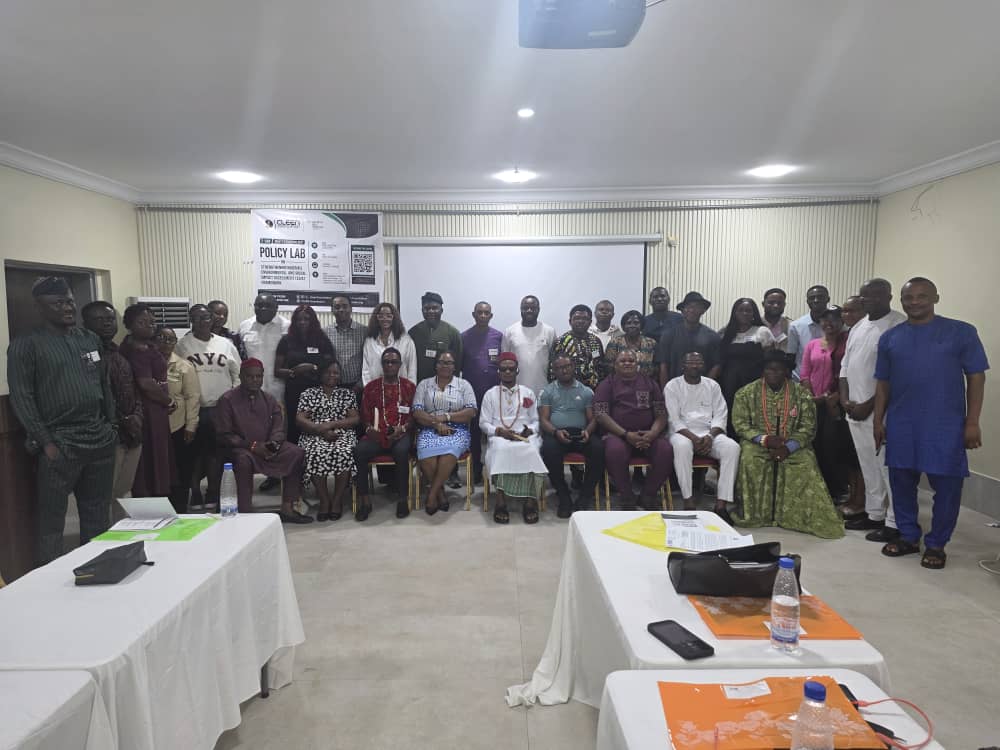
COMMUNIQUÉ ISSUED BY STAKEHOLDERS DU RING THE TWO DAYS MULTI-STAKEHOLDERS POLICY LAB ON STRENGTHENING NIGERIA’S ENVIRONMENTAL AND SOCIAL IMPACT ASSESSMENT (ESIA) FRAMEWORK FOR A FUTURE-READY AND JUST ENERGY TRANSITION ORGANIZED BY CLEEN FOUNDATION ON JULY 20th & 21st, 2026 WITH SUPPORT FROM HEINRICH BOLL STIFTUNG.


BEYOND THE BALLOT: EARLY SECURTY ASSESSMENT IN THE EKITI GUBER ELECTION SUGGEST FALCON EYE VIGILANCE, PEACEFUL PROCESS, EFFECTIVE SECURITY COORDINATION WITH MARGINAL CONCERN ON SECURITY NEUTRALITY
Related Posts