
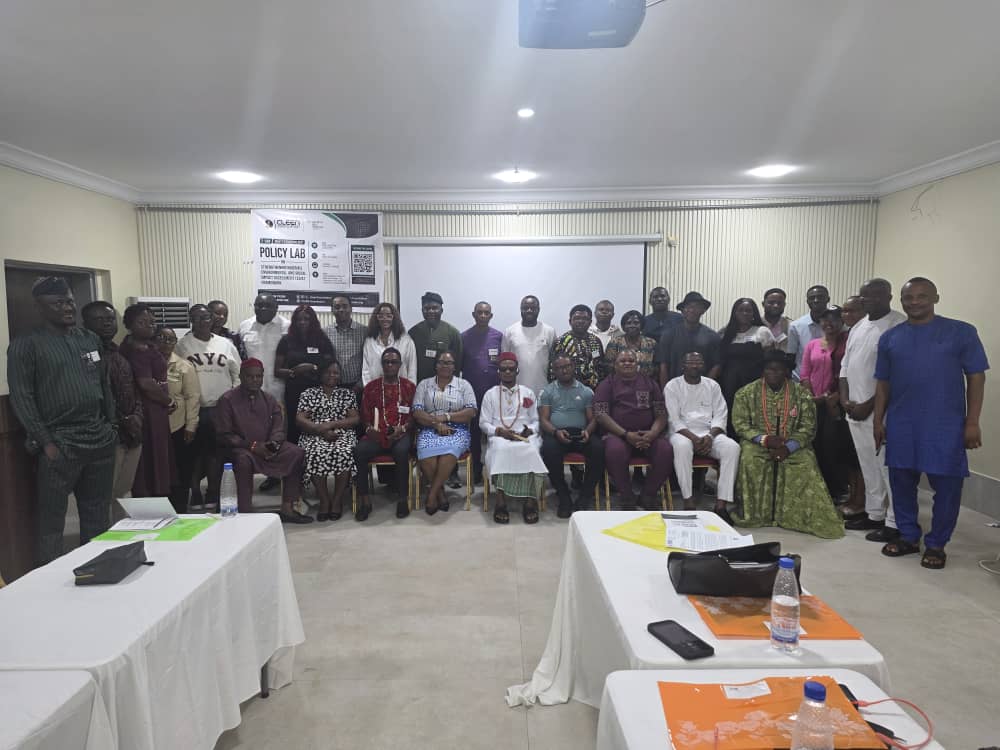
COMMUNIQUÉ ISSUED BY STAKEHOLDERS DU RING THE TWO DAYS MULTI-STAKEHOLDERS POLICY LAB ON STRENGTHENING NIGERIA’S ENVIRONMENTAL AND SOCIAL IMPACT ASSESSMENT (ESIA) FRAMEWORK FOR A FUTURE-READY AND JUST ENERGY TRANSITION ORGANIZED BY CLEEN FOUNDATION ON JULY 20th & 21st, 2026 WITH SUPPORT FROM HEINRICH BOLL STIFTUNG.
Introduction
We, the representatives of host communities, youth organisations, regulators, enforcement agencies, women’s groups, civil society organisations, traditional institutions, community-based organisations, environmental advocates, and other stakeholders, having participated in the Two Days Multi-Stakeholders Policy Plan on Strengthening Environmental and Social Impact Assessment (ESIA) framework for a future-ready and just energy transition, hereby issue this communiqué.
Following intensive deliberations on the findings of the study Strengthening Nigeria’s Environmental and Social Impact Assessment (ESIA) Framework for a Future-Ready and Just Energy Transition, we acknowledge that Environmental and Social Impact Assessment is more than a regulatory requirement; it is a critical governance tool for protecting the environment, safeguarding community livelihoods, promoting sustainable development, and ensuring that the benefits of Nigeria’s energy transition are shared equitably. The study demonstrates that while Nigeria has an operational ESIA framework, significant reforms are required to improve legal provisions, institutional effectiveness, climate integration, transparency, community participation, and preparedness for emerging energy technologies.
Recognising the environmental lessons from the Niger Delta and the opportunities presented by the country’s evolving energy transition agenda, we collectively call on governments, regulators, legislators, industry, development partners, and civil society to prioritise comprehensive reforms that place communities at the centre of environmental governance.
Rationale
Communities are the first to experience the environmental, social and economic consequences of development projects. Effective ESIA implementation is therefore essential to prevent environmental degradation, protect public health, preserve biodiversity, reduce conflicts, strengthen investor confidence, and ensure that future energy investments contribute to sustainable and inclusive development. Strengthening Nigeria’s ESIA framework is not only an environmental imperative but also a strategic investment in national development, climate resilience, social justice and long-term prosperity.
Twelve-Point Communiqué
- Amend the Environmental Impact Assessment Act
We call on the Federal Government and the National Assembly to urgently review and modernise the Environmental Impact Assessment (EIA) Act of 1992 to reflect current environmental realities and international best practices. The existing legislation has served Nigeria for over three decades but no longer adequately addresses contemporary issues such as climate change, cumulative impact assessment, biodiversity conservation, and emerging energy technologies. As Nigeria transitions towards a cleaner and more diversified energy future, the legal framework must evolve to provide clear guidance for new forms of development. A revised ESIA Act should strengthen environmental governance, improve regulatory certainty, and promote sustainable investment. We believe that legislative reform is fundamental to achieving a future-ready and resilient environmental governance system.
- Prepare Nigeria for Emerging Energy Technologies (Green Hydrogen and Nuclear)
Nigeria’s environmental governance system must be prepared for the opportunities and challenges presented by emerging energy technologies such as green hydrogen and nuclear energy. Dedicated ESIA guidance should be developed for renewable energy infrastructure, battery energy storage systems, green hydrogen, carbon capture and storage, critical minerals and future nuclear energy projects. Regulators should receive specialised training to assess and manage the unique environmental and social risks associated with these technologies. Proactive planning will enhance investor confidence while ensuring that technological innovation does not compromise environmental protection. We believe that preparing today will enable Nigeria to successfully manage tomorrow’s energy transition.
- Strengthen Community Benefit-Sharing and Grievance Mechanisms in line with Just Energy Principles
Communities hosting development projects should receive fair and transparent benefits from investments taking place within their localities. Every major project should establish accessible grievance redress mechanisms that allow concerns to be resolved quickly, fairly and without intimidation. Community Development Agreements should be strengthened to ensure that local people benefit through employment, infrastructure development, education, healthcare and livelihood opportunities. Fair benefit-sharing arrangements contribute to social stability and reduce conflicts between project developers and host communities. We therefore advocate for development that delivers shared prosperity while respecting community rights and environmental integrity.
- Improve Environmental Awareness and Community Capacity
Communities can only participate effectively in environmental governance when they possess adequate knowledge and understanding of the ESIA process. Government institutions, civil society organisations and development partners should invest in continuous environmental education, awareness campaigns and capacity-building programmes at the grassroots level. These initiatives should empower communities to understand their rights and responsibilities while promoting informed participation in environmental decision-making. Building local capacity will strengthen environmental stewardship and improve long-term compliance with environmental standards. We reaffirm our commitment to becoming active partners in safeguarding Nigeria’s environment through knowledge, collaboration and responsible citizenship
- Foster Multi-Stakeholder Collaboration for ESIA Reform
Achieving meaningful ESIA reform requires collective action from government, communities, industry, academia, civil society organisations and development partners. No single institution can successfully address the complex environmental challenges associated with sustainable development and the energy transition. We encourage the establishment of regular multi-stakeholder dialogue platforms to promote policy learning, knowledge exchange and collaborative environmental governance. Partnerships should also support research, innovation, institutional capacity development and the implementation of evidence-based reforms. Together, we can build a transparent, accountable and future-ready ESIA system that protects the environment while supporting inclusive economic development and a just energy transition.
- Place Communities at the Centre of Environmental Decision-Making
Communities must no longer be treated as passive recipients of development decisions but recognised as equal partners throughout the ESIA process. Public participation should begin during project planning and continue throughout implementation, monitoring and project closure. Community concerns, traditional knowledge and local experiences should meaningfully influence environmental decisions rather than merely satisfy procedural consultation requirements. Inclusive participation strengthens project legitimacy, reduces conflicts and promotes shared ownership of development outcomes. We therefore advocate for a people-centred ESIA system that genuinely reflects the voices and aspirations of affected communities.
- Harmonize and Strengthen Environmental Governance Institutions
Effective environmental governance depends on strong, independent and adequately resourced institutions. Regulatory agencies responsible for ESIA administration should receive sufficient financial resources, modern equipment and continuous technical capacity development to fulfil their mandates effectively. Greater collaboration among federal, state and sectoral regulators is required to eliminate duplication of responsibilities and improve environmental oversight. We also call for stronger compliance monitoring, enforcement mechanisms and post-project follow-up to ensure that approved mitigation measures are fully implemented. Strengthening institutions will enhance public confidence and improve environmental protection across Nigeria.
- Guarantee Transparency and Public Access to Environmental Information
Environmental information is a public good and should be accessible to all citizens in a timely and understandable manner. ESIA reports, environmental monitoring data, compliance records and regulatory decisions should be published through easily accessible digital platforms. Transparency promotes accountability, strengthens public trust and enables communities to actively participate in protecting their environment. Communities should not struggle to obtain information that directly affects their health, livelihoods and natural resources. We therefore urge government institutions to adopt open and transparent environmental governance practices consistent with international standards.
- Enhance Inclusive Participation and Social Justice
Environmental governance should ensure that every member of society has an opportunity to contribute to decisions affecting their future. Women, young people, persons with disabilities, indigenous populations and other vulnerable groups should participate fully throughout the ESIA process. Their perspectives often provide valuable insights into environmental risks, community priorities and sustainable resource management. An inclusive ESIA system promotes social equity, reduces marginalisation and supports the principles of a just energy transition. We therefore call for deliberate policies that guarantee equitable representation and meaningful engagement for all stakeholders.
- Integrate Climate Change into Environmental and Social Impact Assessment
Climate change should become a central component of all Environmental and Social Impact Assessments undertaken in Nigeria. Every major development project should assess greenhouse gas emissions, climate risks, adaptation requirements and ecosystem resilience before approval is granted. Environmental assessments must also consider cumulative impacts and long-term environmental sustainability rather than focusing solely on immediate project effects. Strengthening climate integration will ensure that infrastructure investments remain resilient under changing climatic conditions. We believe this reform is essential for supporting Nigeria’s national climate commitments and sustainable development aspirations.
- Ensure Effective Environmental Monitoring, Compliance and Enforcement
Approval of an ESIA should mark the beginning rather than the end of environmental oversight. Continuous environmental monitoring should be mandatory throughout the construction, operation and decommissioning phases of every project. Regulatory agencies should undertake regular inspections, while independent environmental audits and community-based monitoring should complement official oversight. Developers that fail to comply with approved environmental management plans should be held accountable through appropriate sanctions and corrective actions. Strong compliance systems will improve environmental performance and reduce the likelihood of long-term environmental degradation.
- Learn from the Environmental Lessons of the Niger Delta
The environmental challenges experienced in the Niger Delta provide important lessons for future development across Nigeria. Weak environmental oversight, poor enforcement and limited community participation have contributed to decades of pollution, ecosystem degradation and social conflict. These mistakes should not be repeated as Nigeria expands investments in renewable energy, critical minerals and other emerging energy sectors. Future projects must prioritise pollution prevention, environmental stewardship and proactive risk management from the earliest stages of development. We urge policymakers to use the lessons of the Niger Delta to strengthen future environmental governance and protect future generations.
Our Collective Call
We reaffirm our commitment to promoting environmental justice, responsible resource development and sustainable livelihoods. We urge all levels of government, regulatory agencies, legislators, private sector organisations and development partners to adopt the recommendations contained in this study and implement the proposed ESIA reforms without delay.
As communities, we pledge to work constructively with government, industry and other stakeholders to promote transparency, environmental stewardship, peaceful dialogue and shared responsibility in protecting Nigeria’s environment for present and future generations.
Closing Statement
A robust Environmental and Social Impact Assessment system is fundamental to protecting our environment, safeguarding our communities, attracting responsible investment and ensuring that Nigeria’s transition to a low-carbon future is inclusive, equitable and sustainable. The future of our environment depends on decisions we make today.
Participants Organizations
- Rivers State Ministry of Environment
- National Environmental Standards and Regulatory Enforcement Agency (NESREA)
- National Oil Spill Detection & Response Agency (NOSDRA)
- Nigeria Electricity Regulatory Commission (NERC)
- Green Leaf Advocacy and Empowerment Center
- Rights Advocacy and Development Centre – RADEC
- Environmental Defenders Network
- Rainbow Watch and Development Centre
- Hope for Tomorrow Initiative (HOFTI Centre)
- Miideekor Environmental Development Initiative-MEDI
- Women’s Forum for Sustainable Green Development
- Kebetkache Women Development & Resource Centre
- University of Port Harcourt
- Traditional institution
- SDN
- Social Action
- OLEGH Centre for Community Development
- Kallop Centre
- Host Community
- Community Conciliation and Development Initiative
- Voices for Change
- Media Awareness and Justice Initiative (MAJI)
- Guardian
- Goi Community
- Rivers State Ministry of Energy and Natural Resources
Related Posts
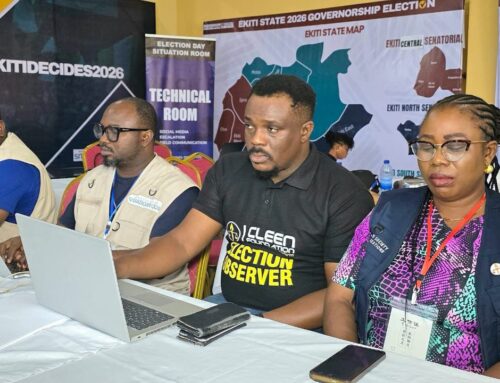
BEYOND THE BALLOT: EARLY SECURTY ASSESSMENT IN THE EKITI GUBER ELECTION SUGGEST FALCON EYE VIGILANCE, PEACEFUL PROCESS, EFFECTIVE SECURITY COORDINATION WITH MARGINAL CONCERN ON SECURITY NEUTRALITY


Related Posts